
Recoding the Codex: Cultural Heritage Through Language
ReflectSpace Exhibition
Wednesday, July 29
All day
Artists from Korea and the United States employ language through script, handwriting, archival materials, and text to examine collective memory, social justice, and cultural heritage.
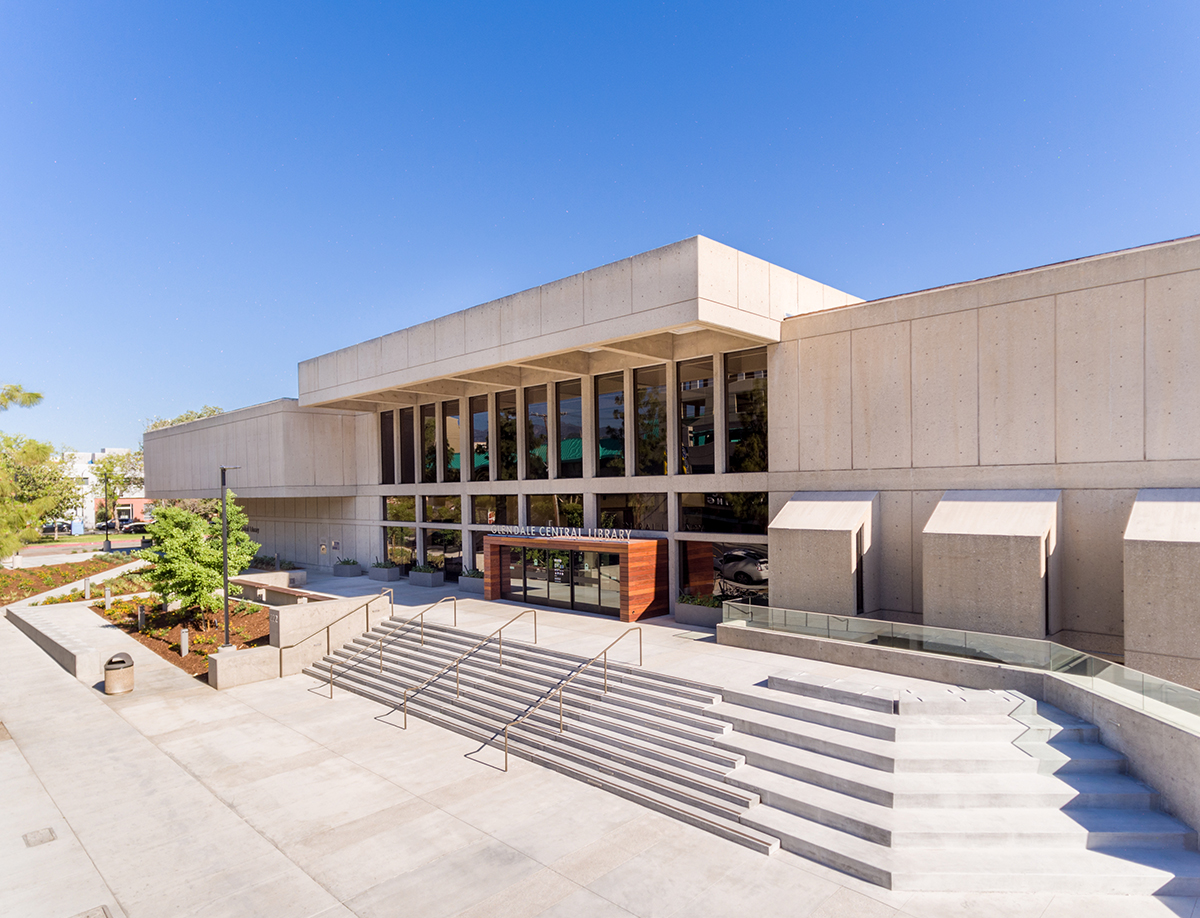
ReflectSpace presents ReCoding the Codex: Cultural Heritage through Language, an exhibition that considers the complicated relationship between language, social justice, and cultural heritage. The codex is the historical name for a book, this becomes the starting point for the artists to re-create or re-code the way language is seen and read. Located inside Central Library, Glendale’s ultimate repository of language and books, ReflectSpace is the ideal setting for this exhibition, which intersects art, social justice, and language.
Through drawing, painting, sculpture, installation and video, the artists employ language in the form of script, handwriting, calligraphy, historical records, and archival and commercial texts, to highlight social justice issues that are relevant to their unique cultural communities. Based in the U.S. and Korea, ReCoding the Codex addresses colonization, Japanese American incarceration, and exploitation of agricultural workers, creating an international dialogue about harnessing the power of text and word in innovative ways.
In the PassageWay, works from Self Help Graphics & Art, an East L.A. art institution, extend these themes through pieces from their vast print and monograph collection.
ReflectSpace artists: Hyun Ho Hwang, Bryan Ida, Jin Woo Kim, Narsiso Martinez and Jung Min Park.
PassageWay artists from Self-Help Graphics & Art: Sandow Birk, Raul Caracoza Jr., Avis Charley, Alex Donis, Sandra Fernandez, Lysa Flores, Brandy Flower, Melissa Govea, Miles Hamada, Tina Hernandez, Sandra de la Loza, Alvaro D. Marquez, Dalila Paola Mendez, and Laura Molina.
ReCoding the Codex, curated by Ara and Anahid Oshagan and Monica Hye Yeon Jun, is part of a series of ReflectSpace exhibitions addressing cultural heritage launched in 2025 with Reimagining Algorithms: Cultural Heritage in the Age of AI and is on view July 25 through October 10, 2026. For more information, visit ReflectSpace.org.
This exhibition is sponsored by the Glendale Arts & Culture Commission through funding from the Urban Art Fund.
---
Visitors to the Glendale Central Library receive 3-hour FREE parking across Harvard Street at the Marketplace parking structure with validation at the service desk.
Metered parking is available on Harvard Street and on the west side of the building in Lot 10.
Accessible parking is available on any metered space for free with the use of an ADA placard when displayed. This includes parking in Lot 10 (parallel to Brand Blvd behind BevMo). ADA parking spots on the South side of Adult Recreation Center are also available for library patrons.
For additional information about this exhibition, please contact ReflectSpace at ReflectSpace@GlendaleCA.gov.
AGE GROUP: | Adults |
EVENT TYPE: | Arts & Culture Commission | Art Exhibition |
TAGS: | Social Justice | ReflectSpace | Arts & Culture Commission | Art Gallery | Art Exhibition |
Glendale Central Library
Established in 1906.
Library services in Glendale were first provided in 1906. The women of the Tuesday Afternoon Club, a social and philanthropic organization, raised money through a series of lectures to fund a library collection. The library opened in a renovated pool room at Third and E (Wilson and Everett) Streets with seventy books, soon supplemented by a State Traveling Library of fifty more, and served a population of 1,186.
In 1907, the City Trustees passed Ordinance 53 which established and supported a library which "...shall be forever free to the inhabitants and nonresident taxpayers of the City of Glendale..." The first year the library had 251 books, 165 registered patrons, and a budget of $248.88.
In 1913, a Carnegie grant of $12,500 made possible the construction of the main library at Kenwood and Fifth (Harvard Street). The building was completed and dedicated November 13, 1914.